Renewable Energy
Renewable energy comes from natural sources like sunlight, wind, and water. These sources are always around us, and we can use them again and again without running out. Unlike coal, oil, and gas, they don't get used up. Using them also produces very little pollution, so our air, rivers, and land stay cleaner.
Every year, people need more energy. We use it at home for lights, fans, and cooking. We use it in shops, offices, and factories. Most of this energy still comes from burning coal and other fuels, which fill the air with smoke and harmful gases. That is why clean energy matters so much today.
Main types of renewable energy
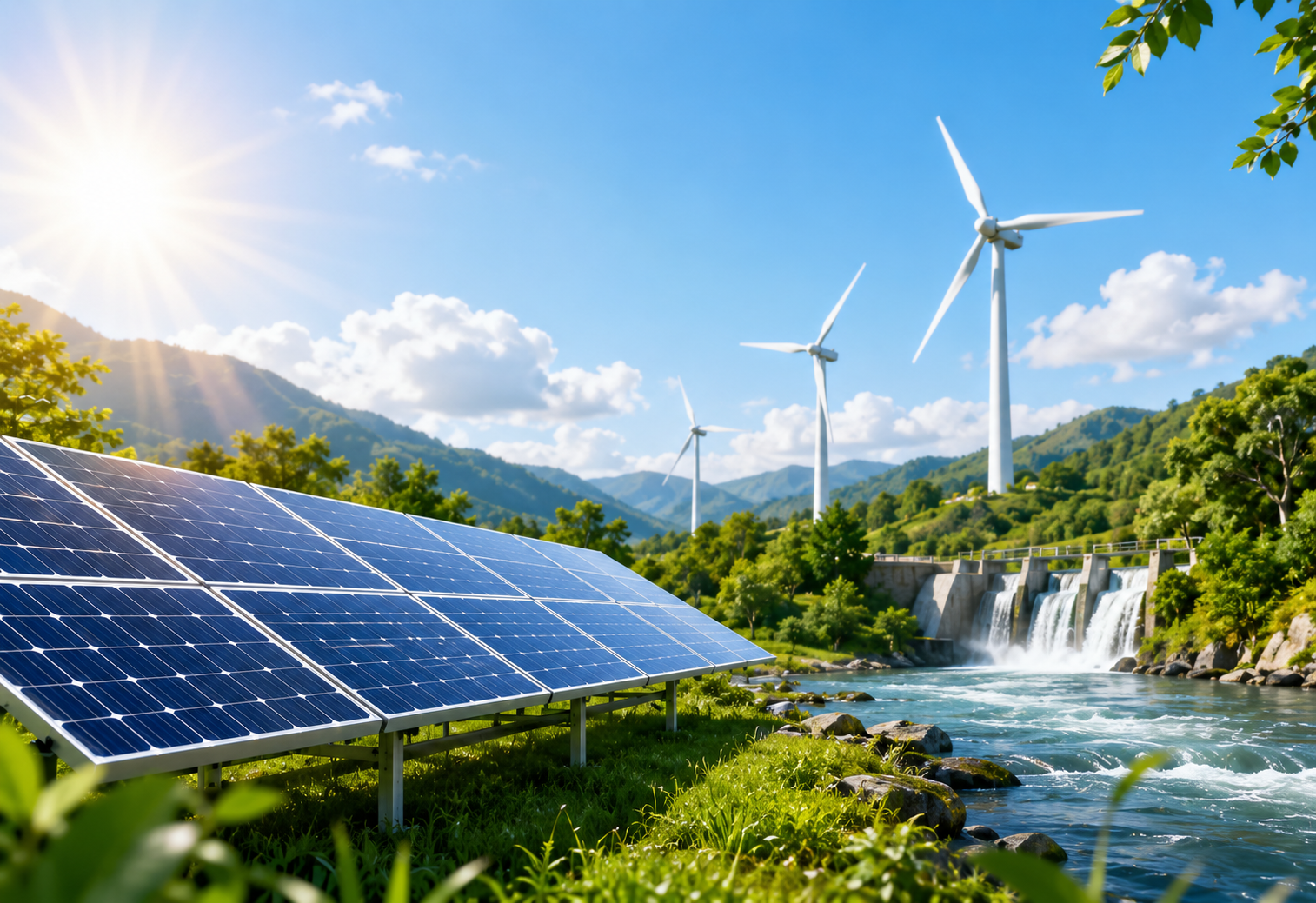
Solar energy comes from the sun. Solar panels catch sunlight and turn it into electricity. A panel on a rooftop can run lights, fans, and even a fridge.
Wind energy comes from moving air. Big wind turbines spin when the wind blows, and that spinning makes electricity. Windy coasts and open fields are good places for them.
Water energy comes from flowing water. Dams and rivers can be used to turn machines that make power. This has been used in many countries for a long time.
Biomass and geothermal energy are two more sources. Biomass uses things like farm waste and cow dung to make fuel. Geothermal uses heat from deep inside the earth.
Why it is a good choice
For homes, solar power can cut electricity bills. After the panels are put up, the sunlight itself is free. Many families find that their monthly bill drops a lot, and some even sell extra power back to the grid.
For businesses and industries, renewable energy helps lower running costs over time. Shops, schools, hospitals, and factories all use a lot of power, so even small savings add up. It also makes them less dependent on fuel prices, which keep going up and down.
For nature, the benefit is clear. Using less coal and petrol means less smoke, cleaner air, and fewer health problems like coughs and breathing trouble. It also helps slow down climate change, which is causing heavy rain, heat waves, and dry spells in many places.
It also creates jobs. People are needed to build, fix, and look after solar panels and wind turbines, so new work opens up in towns and villages too.
A few challenges
Renewable energy is not perfect. Solar panels don't work well at night or on cloudy days. Wind doesn't blow all the time. Setting up panels or turbines can cost a lot at the start. But things are getting better. Batteries can now store power for later, and prices of solar panels have come down a lot in the last few years.
Looking ahead
Small steps make a difference. A family can put solar panels on the roof, use a solar water heater, or switch to LED bulbs. Governments can support clean energy with better rules and help with costs.
By choosing renewable energy, we can save money, protect nature, and leave a cleaner, healthier world for the next generation.